Paint rollers, covers and frames
20 popular roller covers, mini roller kits, frames and extension poles from Wooster, Purdy and more.
As an Amazon Associate we earn from qualifying purchases. How we earn
Popular paint rollers, covers and frames
-
Illustration, not the exact product 9 Inch Roller Covers, 3/8 Inch Nap, 18 Pack
Great Andrew
Best for: Semi-smooth and lightly textured walls
View on Amazon (opens Amazon in a separate tab) -

Illustration, not the exact product 18 Inch Pro Roller Covers, 3/8 Inch Nap, 3 Pack
True Blue
Best for: Large wall areas with an 18 inch frame
View on Amazon (opens Amazon in a separate tab) -
Illustration, not the exact product 9 Inch Pro Roller Covers, 3/8 Inch Nap, 6 Pack
True Blue
Best for: Smooth to semi-smooth walls
View on Amazon (opens Amazon in a separate tab) -
Illustration, not the exact product 9 Inch Microfiber Roller Covers, 1/2 Inch Nap, 10 Pack
Pro Grade
Best for: Rough, smooth and semi-smooth surfaces
View on Amazon (opens Amazon in a separate tab) -
Illustration, not the exact product Pro/Doo-Z 9 Inch Cover, 1/2 Inch Nap
Wooster
Best for: Semi-rough and textured walls
View on Amazon (opens Amazon in a separate tab) -

Illustration, not the exact product Pro/Doo-Z 9 Inch Cover, 3/16 Inch Nap
Wooster
Best for: Smooth walls and trim-level work
View on Amazon (opens Amazon in a separate tab) -

Illustration, not the exact product Pro/Doo-Z 18 Inch Cover, 1/2 Inch Nap
Wooster
Best for: Heavy texture on large walls
View on Amazon (opens Amazon in a separate tab) -

Illustration, not the exact product Pro/Doo-Z 18 Inch Covers, 3/16 Inch Nap, 6 Pack
Wooster
Best for: Smooth walls with an 18 inch frame
View on Amazon (opens Amazon in a separate tab) -

Illustration, not the exact product Pro/Doo-Z 18 Inch Covers, 3/8 Inch Nap, 6 Pack
Wooster
Best for: Smooth to semi-smooth walls with an 18 inch frame
View on Amazon (opens Amazon in a separate tab) -

Illustration, not the exact product Jumbo-Koter 4.5 Inch Mini Covers, 2 Pack
Wooster
Best for: Smooth surfaces and small areas
View on Amazon (opens Amazon in a separate tab) -

Illustration, not the exact product Mini Roller Kit, 13 Pieces, Microfiber
Mister Rui
Best for: Touch-ups, trim and cabinets
View on Amazon (opens Amazon in a separate tab) -
Illustration, not the exact product 4 Inch Foam Roller Kit, 8 Pack
Mister Rui
Best for: Smooth walls, furniture and small DIY jobs
View on Amazon (opens Amazon in a separate tab) -

Illustration, not the exact product 4 Inch Mini Roller Set
Voomey
Best for: Mixed finishes on small surfaces
View on Amazon (opens Amazon in a separate tab) -
Illustration, not the exact product 4 Inch Microfiber Mini Roller, 3/8 Inch Nap
ROLLINGDOG
Best for: Walls and trim with a microfiber finish
View on Amazon (opens Amazon in a separate tab) -

Illustration, not the exact product 4 Inch Foam Mini Roller Set, 6 Pack
Luigi's
Best for: Quick jobs and kids' projects
View on Amazon (opens Amazon in a separate tab) -
Illustration, not the exact product Revolution Adjustable Frame, 12 to 18 Inch
Purdy
Best for: An adjustable frame for most wall jobs
View on Amazon (opens Amazon in a separate tab) -
Illustration, not the exact product Adjustable Frame with Pole+, 2 to 4 ft
Purdy
Best for: A frame and pole bundle for wall work
View on Amazon (opens Amazon in a separate tab) -
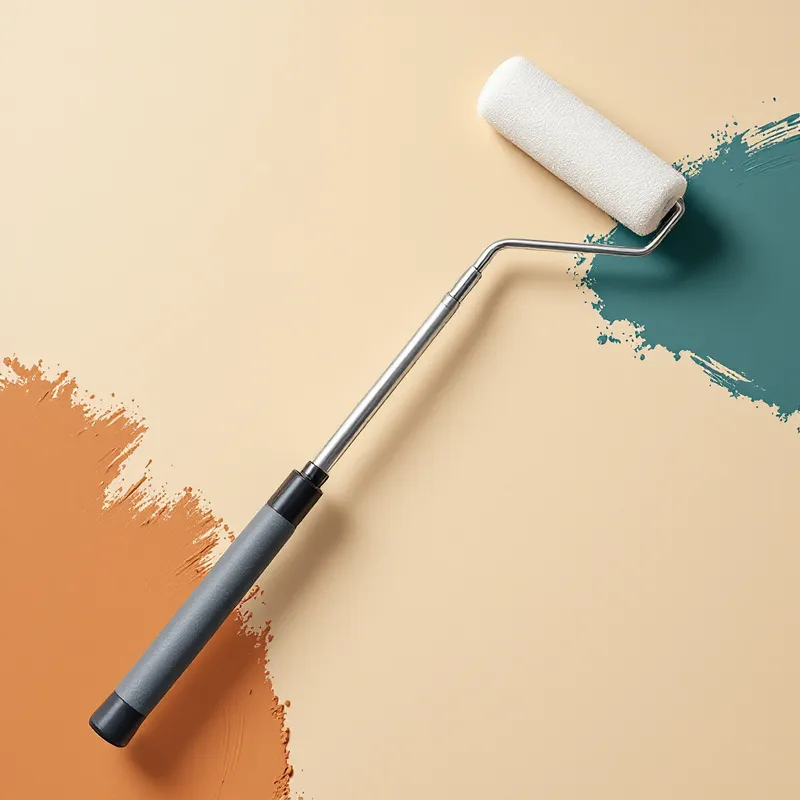
Illustration, not the exact product Power Lock Extension Pole, 4 to 8 ft
Purdy
Best for: Ceilings and high walls
View on Amazon (opens Amazon in a separate tab) -
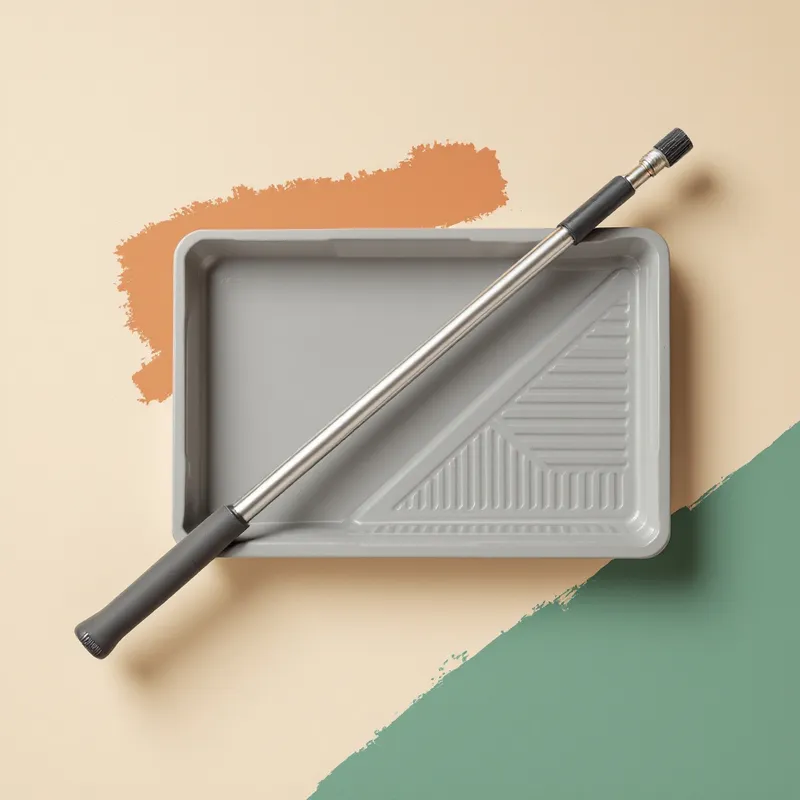
Illustration, not the exact product Power Lock Extension Pole, 1 to 2 ft
Purdy
Best for: Short reach for cabinets and trim
View on Amazon (opens Amazon in a separate tab) -

Illustration, not the exact product Revolution 9 Inch Roller Frame
Purdy
Best for: A 9 inch frame for standard covers
View on Amazon (opens Amazon in a separate tab)
01
Guides
Choosing a roller, matching it to the surface, and the techniques that make the finish.
Choose a roller
By surface
How-to
Tools
02
The short version
For most interior walls you want a 9 inch frame with a 3/8 inch nap cover. Go shorter and woven for cabinets, trim and gloss; go longer for texture, stucco and brick. Three choices decide how a roller job turns out.
Nap follows texture
The rougher the surface, the longer the nap. 3/8 inch for smooth walls, 1/2 inch for light texture, 3/4 inch for stucco and popcorn, 1 inch and up for brick and block. Nap guide.
Cover follows sheen
Glossy paint shows every stipple and fiber, so pair it with a woven, microfiber or foam cover. Flat paint hides texture, so a faster knit cover is fine. Foam vs microfiber.
Keep a wet edge
Most roller marks are lap marks: fresh paint rolled over paint that has started to dry. Work in sections, roll from wet into dry, and break only at corners. Avoid roller marks.
03
Nap chart: which nap for which surface
Drawn from the nap guidance Benjamin Moore, Purdy and Sherwin-Williams publish. Pick a surface to highlight its nap.
Show the nap for
-
1/4 in. and under
smooth
Very smooth: metal doors, trim, cabinet doors, plaster, smooth drywall
-
3/8 in.
semi-smooth
Smooth to semi-smooth: most interior walls and flat ceilings, paneling
-
1/2 in.
semi-rough
Semi-rough: lightly textured walls and ceilings, rough wood, decks, concrete
-
1 in. to 1-1/4 in.
very rough
Very rough: brick, concrete block, cinder block, fences
Pile lengths in the bars are drawn at actual size in CSS inches, so they are close on most screens but not exact. Cross-sections are scaled up to show the difference.
04
Which roller do I need?
Three taps: surface, sheen and texture. You get a nap, a cover material, a width and two things to look at, with the reason for each.
Your roller
05
Cover materials at a glance
Purdy and Benjamin Moore split covers into woven (smoother, less lint) and knit (more paint, faster, a little stipple). Sherwin-Williams adds the paint rule: synthetic for latex, natural fibers for oil.
Roller cover materials at a glance
| Material | Build | Best for | Watch for |
|---|---|---|---|
| Microfiber | Woven or knit blend | Smooth walls, ceilings, cabinets; most sheens | Can shed if cheap; de-lint before use |
| Woven synthetic | Woven | Semi-gloss and gloss, trim, doors; lowest lint | Holds less paint than knit |
| Knit polyester or nylon | Knit | Flat and eggshell walls, texture, fast coverage | Leaves more stipple |
| Foam | Molded foam | Cabinets, doors, furniture, smooth enamel | No reach into texture; can bubble if rolled fast |
| Mohair | Natural, woven | Oil-based enamels and gloss on smooth surfaces | Natural fibers can mat with latex (Sherwin-Williams) |
| Lambswool or sheepskin | Natural, knit | Oil-based paint on walls | Water in latex can swell and mat it |
| Poly and wool blend | Blend | All paints; extra pickup with longer life | Usually a pricier cover |
Shopping covers? Start with the best roller covers by job.
06
The kit for one room
What a typical bedroom repaint needs, and nothing more. Each button opens an Amazon search so you can compare current options.
9 inch frame
A sturdy 5-wire frame with a threaded handle so a pole screws on.
Search Amazon3/8 inch cover
Microfiber or knit for smooth walls in flat to satin.
Search AmazonExtension pole
4 to 8 ft covers most walls and standard ceilings from the floor.
Search AmazonTray or grid
A deep-well tray for one room; a bucket grid for big jobs.
Search AmazonAngled brush
A 2 to 2-1/2 inch angled sash brush for cutting in.
Search Amazon5-in-1 tool
Scrapes paint back into the can and cleans the cover.
Search Amazon
07
Questions people ask
What size paint roller do I need for walls?
A 9 inch roller with a 3/8 inch nap suits most smooth interior walls. Benjamin Moore calls 3/8 inch “best for walls and ceilings”. Step up to 1/2 inch for lightly textured walls, and use a 4 inch mini roller for narrow spots.
What does nap mean on a roller?
Nap (or pile) is the length of the fibers on the roller cover. Short naps leave a smoother finish on smooth surfaces; long naps hold more paint and reach into texture. Paint makers agree: the more texture the surface has, the thicker the nap should be.
Which roller gives the smoothest finish?
A short nap (1/4 inch or less) woven or microfiber cover, or a high-density foam roller, on a smooth surface. Purdy says woven fabrics leave little lint and a very smooth finish, which is why they pair well with semi-gloss and gloss.
Are expensive roller covers worth it?
Often, yes, for visible walls. Benjamin Moore says cheaper rollers tend to shed fibers and break down after repeated washing, and suggests looking for beveled edges, no visible seams, a plastic core and bounce-back when squeezed.
Should I use a roller or a brush?
Use both. Cut in corners, edges and trim with a brush, then roll the open areas while the brushed edge is still wet. A roller is much faster on large flat areas and leaves a more even texture than a brush.
How much paint does one roller cover?
Coverage depends on the paint, not the roller. Sherwin-Williams’ calculator uses about 350 to 400 square feet per gallon; the label on your can is the number to trust. Rough surfaces and thick naps use more.
Sources: Benjamin Moore, Purdy, Sherwin-Williams, Sherwin-Williams paint calculator.